Nylon vs Polyester for Activewear: Which Fabric Should You Choose?
Pick up a premium pair of leggings and a budget pair from a fast-fashion rack, and the difference you feel in your hand is usually one thing: the fabric. And the single biggest fabric decision in activewear is nylon versus polyester. Both are synthetic, both stretch well with spandex, and both dominate the market — but they feel, wear and cost very differently.
As a manufacturer producing in both fibers every day, here is the comparison we walk our clients through before sampling.
The 30-Second Comparison
| Property | Nylon (Polyamide) | Polyester |
|---|---|---|
| Hand feel | Softer, silkier, “premium” | Smoother but drier; can feel plasticky at low grades |
| Moisture | Absorbs slightly more, dries well | Wicks fast, hydrophobic, dries fastest |
| Durability | Excellent abrasion resistance | Strong, holds color better |
| Pilling | Low with high-knit density | Low to moderate, grade-dependent |
| Color / print | Deeper dye penetration, richer darks | Excellent sublimation printing |
| UV & chlorine | Degrades faster in sun | Chlorine-resistant (better for swim) |
| Cost | ~15–30% higher | Lower, stable supply |
Why Premium Brands Choose Nylon
Nylon (labelled polyamide on care tags) has a softer, more “creamy” hand feel — the reason nearly every high-end leggings brand builds its signature line on nylon-spandex, typically in an 80/20 or 75/25 blend. It drapes closer to the body, resists abrasion from barbell contact and floor work, and takes dark dyes beautifully — blacks look deeper and stay richer after washes.
The trade-offs: nylon costs roughly 15–30% more than polyester at the same knit quality, and it degrades faster under constant UV exposure, which matters for outdoor run programs.
Best for: premium yoga leggings, compression wear, seamless-look sets, everyday luxury activewear — any product where touch sells the garment.
Why Volume Programs Choose Polyester
Polyester is the workhorse of the sportswear world. It wicks moisture fastest, dries quickest, resists chlorine and UV better, and — critically for teamwear and printed programs — it is the only fiber that takes sublimation printing reliably. Cost per meter is lower and supply chains are deep, which keeps unit prices down for large programs.
Modern recycled polyester (rPET, GRS-certified) also lets brands carry a sustainability story without a big price premium, which is harder to do with nylon.
Best for: running tees, gym tanks, teamwear with printed logos, swimwear, value-focused programs and anything sublimated.
The Spandex Question: How Much Stretch?
Whichever base fiber you pick, the spandex percentage defines the stretch and recovery profile:
- 10–15% spandex: light compression, comfortable lifestyle stretch
- 18–22% spandex: the sweet spot for leggings — sculpting hold with full squat-proof recovery
- 25%+ spandex: firm compression zones (waistbands, shapewear-style panels)
Two fabrics with the same blend ratio can still behave differently — knit structure, denier and finish matter as much as the fiber itself. This is why we always recommend sampling before committing to a fabric code.
Common Myths, Quickly Corrected
“Polyester always smells after workouts.” Odor retention is real in low-grade polyester but modern silver-ion and HeiQ finishes solve most of it — ask your factory for anti-odor treated yarns.
“Nylon pills less.” Not automatically. Pilling depends on knit density and yarn twist; a cheap nylon can pill worse than a good polyester. Test with a Martindale or pilling box test before bulk.
“Recycled means lower quality.” GRS-certified rPET from reputable spinners performs identically to virgin polyester in most constructions.
What It Means for Your Cost Sheet
For a 200 GSM legging program in China: nylon-spandex knits typically land 15–30% above equivalent polyester-spandex at the same quality tier. On a $9.00 polyester legging, expect roughly $10.50–$11.50 in nylon. Whether that premium is worth it depends on your retail position: at $30 retail, polyester wins the margin math; at $60+, nylon’s hand feel is usually the difference between “nice” and “this feels expensive” in your customer’s hands.
Test Both Before You Decide
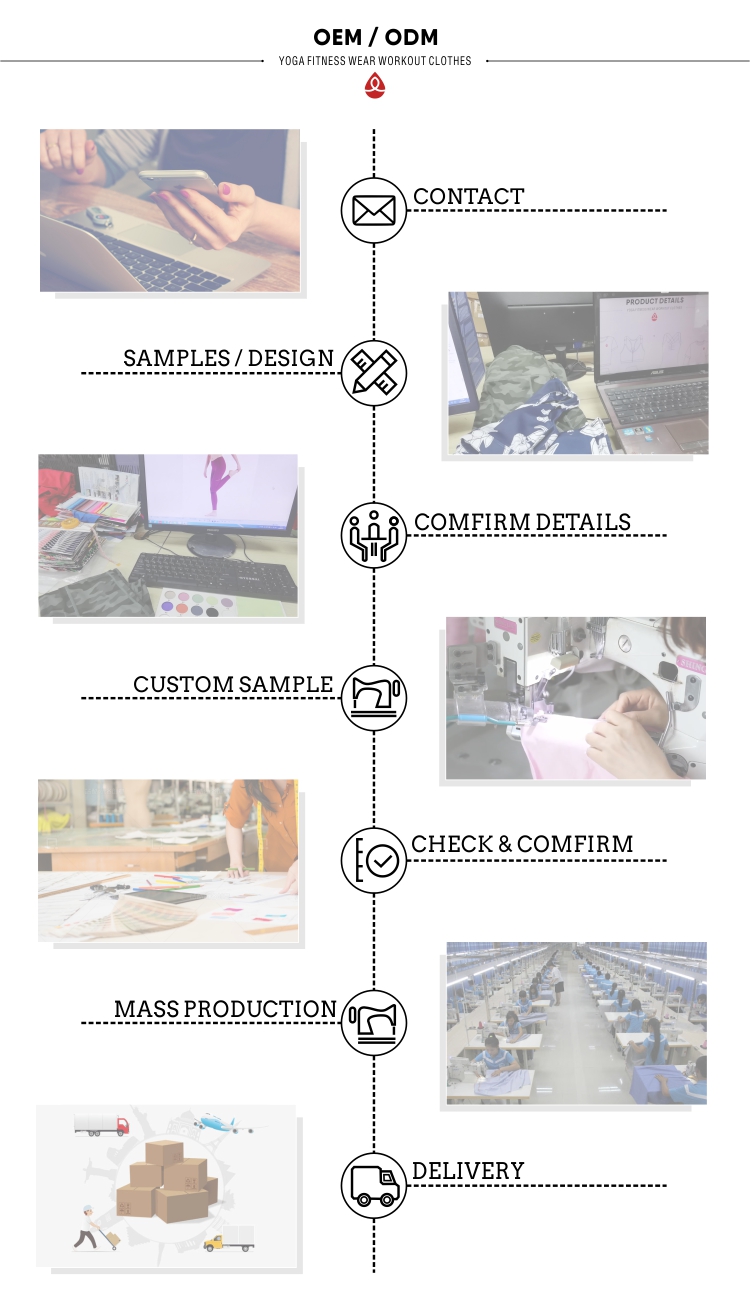
The fastest way to decide is to feel the two fabrics side by side in your own sample. Send us your target style or reference garment: OMI Apparel will sample your style in both nylon and polyester constructions, quote them side by side with a full cost breakdown, and ship within 5–7 days. Full-package production, MOQ from 200 pieces per style, tech pack development included.