EU vs US Size Grading: A Guide for Activewear Brands
Two brands order the same pair of leggings from the same factory. One sells out in EU sizes 34–42; the other floods customer service with “runs too small” complaints. The difference is rarely the sewing — it is size grading, and the fact that European and American bodies are not graded the same way.
As a manufacturer serving both EU and US brands, we see the same grading mistakes every season. Here is what you need to know before your next tech pack goes into production.
EU and US Bodies Are Built on Different Base Sizes
The EU system typically starts from a base size 38 (women’s) built on metric body measurements with a height assumption of around 168–170 cm. The US system starts from a base size 8 or M, but with different key body landmarks: US charts often assume a taller or differently proportioned block, and US plus segments start earlier than EU plus segments.
The result: a straight conversion (“EU 38 = US 8″) only works at the base size. Every size above or below diverges, because the two systems grade different amounts per size on different body points.
Grading Increments: Where the Systems Differ
| Body Point | Typical EU Increment (per size) | Typical US Increment (per size) |
|---|---|---|
| Bust / Chest | 4 cm between adjacent sizes | 1–1.5 in (2.5–4 cm), varies by category |
| Waist | 4 cm | 1–2 in (2.5–5 cm), grows faster in bottoms |
| Hip | 4 cm | 1–2 in (2.5–5 cm) |
| Inseam | Graded less aggressively; length via height groups | Regular / Petite / Tall length sets graded separately |
For activewear the differences are amplified by negative ease. A compression legging graded like a woven skirt will either strangle your customer or slide down during a squat. Stretch fabrics need their own grading logic: the higher the spandex content and compression level, the smaller the grading increment you can apply across sizes.
Five Grading Rules for Activewear Brands
1. Lock one base size and one grading library per fit block. Don’t let every style invent its own grading. A consistent legging grade set, bra grade set and tee grade set keep your brand fit predictable — and make future styles faster to develop.
2. Tell your factory which market the grade set serves. A tech pack that says “S–XXL” without declaring EU or US grading will be interpreted by the factory’s default — usually the market they know best. Half of “size complaints” we see trace back to this single missing line.
3. Grade stretch fabric on stretch values, not woven rules. For 75/25 nylon-spandex, typical grading on leggings is 3–4 cm at hip and 2–3 cm at waist per size. Compression zones may grade 1.5–2 cm. If your factory quotes the same increment everywhere, ask why.
4. Control your tolerance, not just your grade. A ±1 cm tolerance on a 4 cm grade is invisible; on a 1.5 cm compression grade it can turn a size M into a size L. Specify tolerance per measurement in the tech pack, tighter on compression points.
5. Fit-check the jump sizes, not every size. Sampling every size is expensive. Grade correctly, then fit the base, one size down and one size up (e.g., S, M, L). If those three pass, the rule holds across the range.
The Cost of Getting It Wrong
Bad grading does not fail loudly. It fails as returns, as discounting to clear mis-graded inventory, and as reviews that quietly mention sizing. For a DTC activewear brand, returns alone often run 15–30% — and fit is the number one stated reason. One correct grade library, reviewed once with your factory, protects every product you launch after it.
How We Handle Grading at OMI Apparel
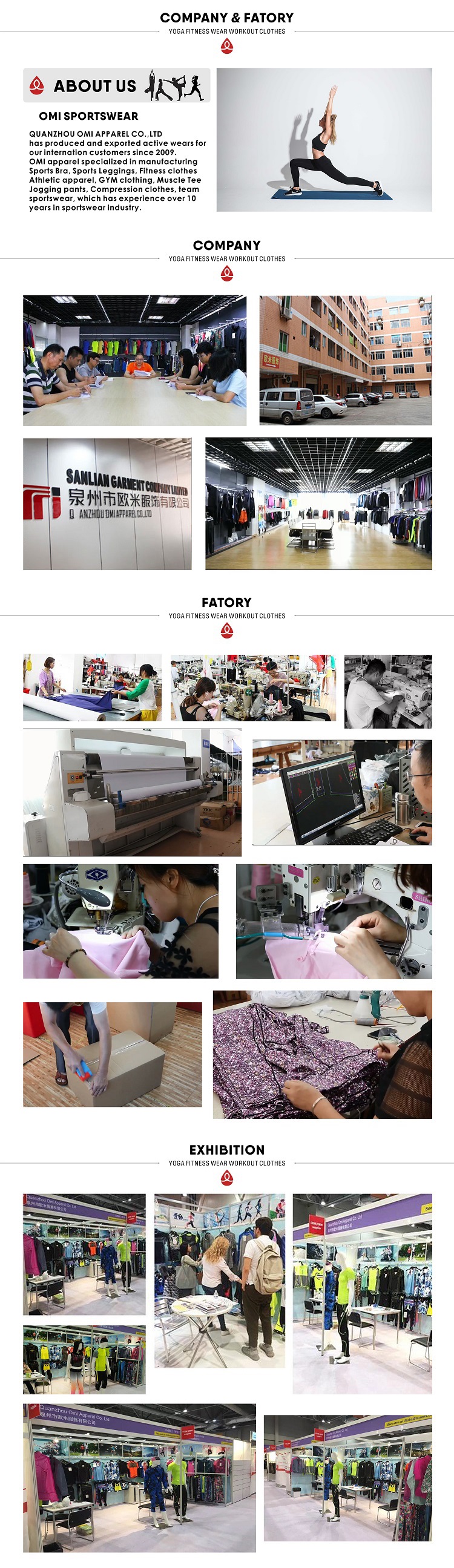
Every OMI Apparel tech pack includes a full grade rule table per fit block, declared for EU or US sizing, with tolerances per measurement. We grade in Gerber CAD, fit-check jump sizes on real bodies, and provide size charts ready for your webshop. Whether you sell in Berlin, Los Angeles or both, your S is the S your customer expects.
Sending us your existing best-fitting garment is the fastest start: we reverse-engineer its grade rules and adapt them to your new styles. Quotation within 24 hours, MOQ from 200 pieces per style.