China Fabric GSM Explained: How to Read Activewear Fabric Specs factory and suppliers | Omi
Every activewear quotation starts with one number: GSM — grams per square meter. It is the single most quoted (and most misunderstood) spec in our industry. Ask for “a good legging fabric” and you will get ten answers; ask for “240 GSM nylon-spandex” and the conversation becomes precise. Here is how to read GSM like a factory insider.
What GSM Actually Measures
GSM is the weight of one square meter of fabric. Heavier GSM = more yarn per square meter = a denser, thicker, more opaque fabric. It is not a measure of quality — a well-knit 220 GSM legging can outperform a badly-knit 280 GSM one. GSM is a density dial: turn it up for support and coverage, down for breathability and drape.
Typical GSM Ranges by Garment
| Garment | Typical GSM | Notes |
|---|---|---|
| Running tee / tank | 130 – 160 | Light and airy; check opacity at 140 and below |
| Sports bra (main body) | 200 – 260 | Higher where support panels are needed |
| Everyday leggings | 200 – 240 | The volume sweet spot for most brands |
| Squat-proof / sculpting leggings | 240 – 280 | Opaque under stretch; premium hand feel |
| Seamless sets | 230 – 280 | Zone-knit density varies within one garment |
| Hoodies & sweatshirts | 280 – 380 | Brushed back for loft and warmth |
How GSM Moves Your Cost
Fabric is usually 40–60% of an activewear garment’s FOB cost, and knit fabric is priced per kilogram — so GSM feeds directly into your unit price. A legging using 240 GSM instead of 200 GSM consumes ~20% more yarn per piece. At a $9.00 unit price that difference is roughly $0.80–$1.20 per piece. This is why “same style, cheaper quote” often hides a lower GSM — always compare fabric weight line by line when you compare quotations.
Four Rules for Specifying GSM
1. Match GSM to opacity, not vibes. The most common failure is a light legging going see-through in a squat. If your garment will be stretched hard, stay at 220 GSM minimum for leggings, or ask the mill for a squat-proof test on the actual knit.
2. Heavier is not automatically better. Above ~280 GSM, leggings lose drape and feel rigid; customers describe them as “hot” and “stiff”. Premium sculpting fabric lives at 240–260 GSM with high spandex, not at max weight.
3. Compare quotes at equal GSM and blend. A quotation that says just “spandex fabric” is a red flag. Insist the quote states: fiber blend, GSM, knit structure, and yarn brand/grade. That is the only fair basis for comparing factory prices.
4. Allow ±5% tolerance in the contract. Knit fabric weight varies naturally by dye lot. A written tolerance of ±5% (e.g., 240 GSM = 228–252) is standard; tighter tolerances are possible but raise the price.
GSM Plus Blend = The Real Spec
GSM never travels alone. The complete spec we recommend on any tech pack or quotation:
- Blend: e.g., 75% nylon / 25% spandex
- GSM: e.g., 250 GSM ±5%
- Knit: e.g., 40D interlock / rib structure
- Finish: e.g., moisture-wicking, anti-pill, squat-proof tested
With these four lines you can reproduce the same fabric anywhere — and no supplier can quietly downgrade your product.
Spec It Right With OMI Apparel
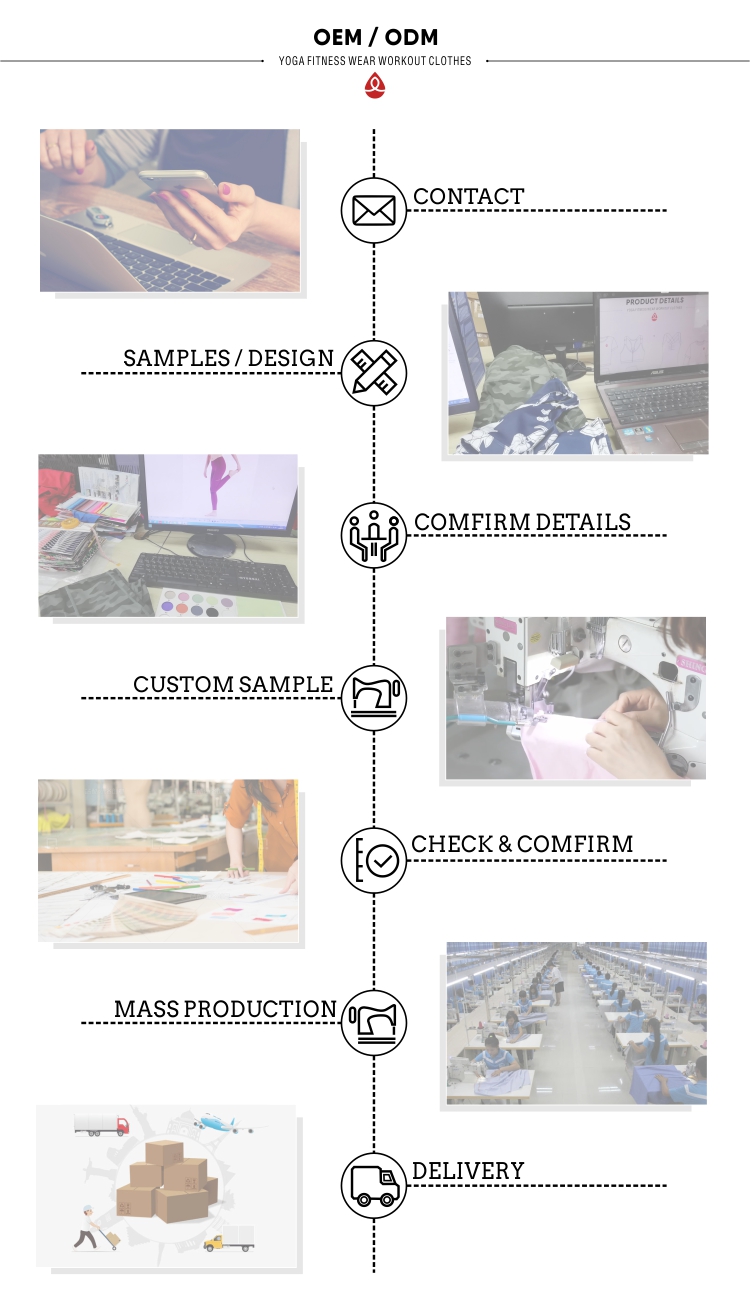
When you request a quote from OMI Apparel, every quotation lists blend, GSM, knit structure and finish explicitly — and we offer two or three GSM options per style so you can see the cost-performance trade-off in real numbers. Send your reference garment or target spec: sampling in 5–7 days, quotation within 24 hours, MOQ from 200 pieces per style.